

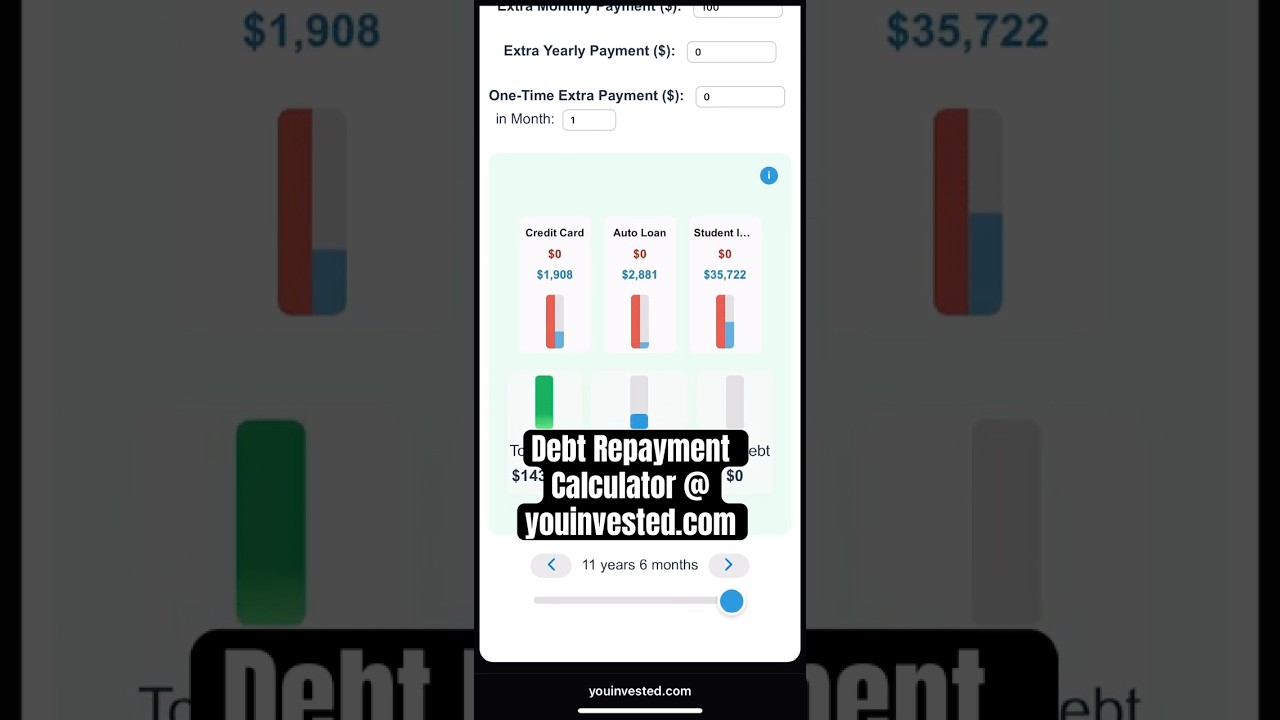
How to Use Our Dynamic Debt Eliminator Tool
Chart your course to being debt-free with our interactive calculator. Input your debts and watch your debt-free timeline update in real-time:
- Your Debts: List each debt (credit cards, loans) with its current balance, interest rate (APR), and minimum payment. See them combine into a plan!
- Payoff Strategy: Choose your method! Debt Snowball (smallest balance first for quick wins) or Debt Avalanche (highest interest first to save money). Our tool shows you the impact of each, live.
This isn't just any debt calculator; it's the best interactive planner designed to make debt reduction less daunting and more empowering by showing you real-time results.
Why Use This Calculator
Compare debt snowball and avalanche methods side-by-side with your specific debts. See your exact debt-free date (the month slider can project up to 100 years), total interest saved, and payoff timeline update in real-time as you adjust extra payment amounts.
10 Essential Debt Repayment Tips
1. Create a Budget
Track your income and expenses to understand where your money goes. Allocate specific amounts to debt repayment while ensuring you can cover essential living expenses. Once debt-free, consider redirecting those payments to build your retirement savings with the same discipline.
2. Prioritize High-Interest Debt
Focus on debts with the highest interest rates first (avalanche method) to save money over time.
3. Use the Snowball Method
Pay off smaller debts first for quick wins and motivation, then tackle larger balances.
4. Negotiate with Creditors
Contact lenders to request lower interest rates or more manageable payment plans.
5. Consolidate Debt
Combine multiple debts into a single loan with a lower interest rate to simplify payments.
6. Cut Unnecessary Expenses
Reduce spending on non-essentials like dining out or subscriptions to free up cash for debt.
7. Increase Income
Take on a side hustle, freelance work, or sell unused items to boost funds for repayment.
8. Make Extra Payments
Pay more than the minimum whenever possible to reduce principal faster and save on interest.
9. Build an Emergency Fund
Save a small amount ($500–$1,000) to avoid new debt from unexpected expenses. Use our compound interest calculator to see how your emergency fund can grow over time while remaining liquid for immediate needs.
10. Stay Consistent
Set up automatic payments and regularly review your debt reduction to stay motivated.